Commercial Blueberry Substrate: Balancing Low EC Coir Pith and Husk Chips for Acidic, Multi-Year Container Crops
CBS Agronomy & Export Technical Team
PT Ridha Dua Keluarga • Sidoarjo, East Java, Indonesia
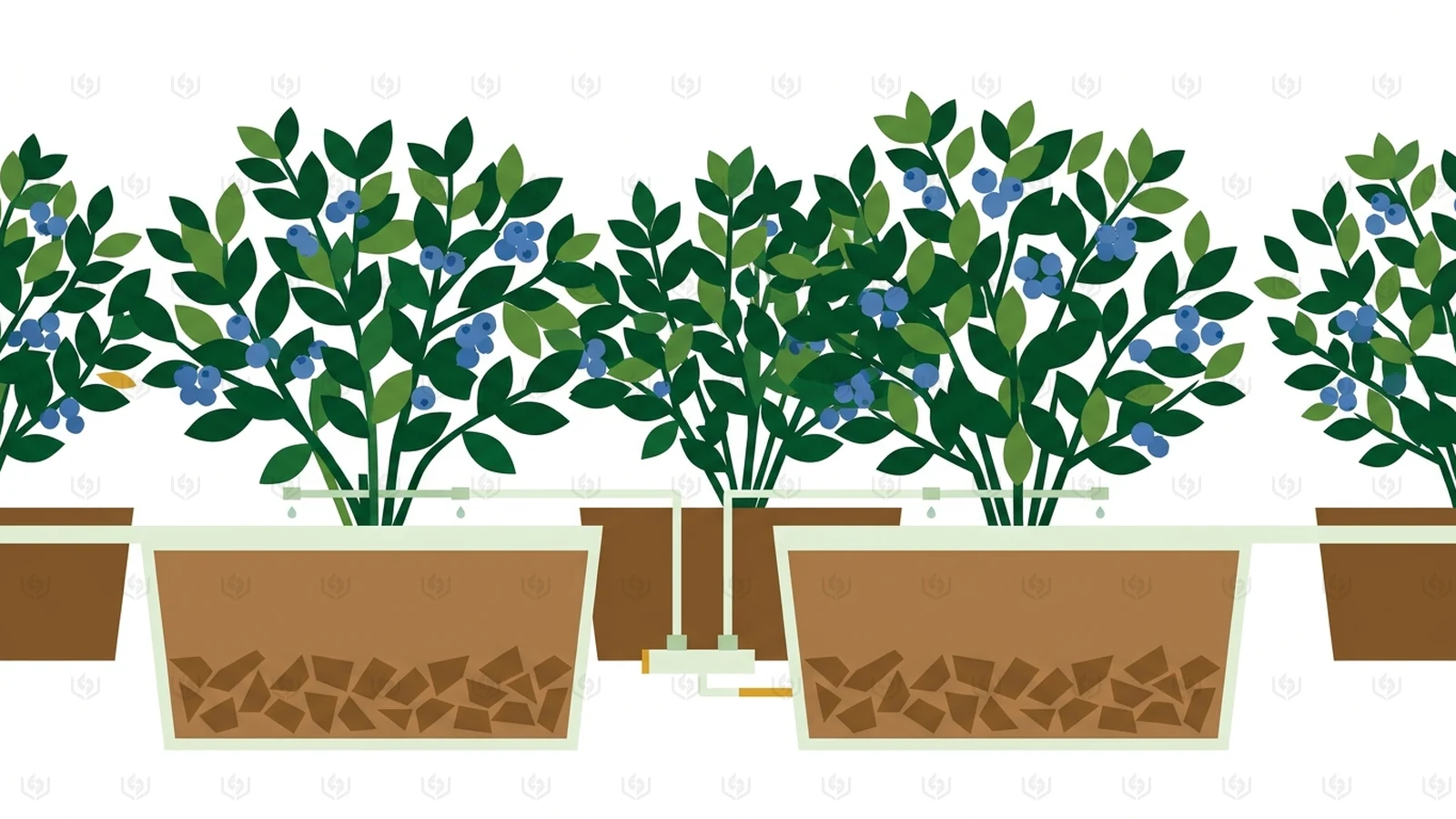
Technical Abstract & Key Parameters
Technical guide to engineering multi-year blueberry media: optimizing air-filled porosity (AFP 25-35%), bridging coir pH to 4.5-5.5, and low-EC salt management.
Commercial blueberry production (Vaccinium corymbosum) has experienced a rapid structural transition over the past decade. Faced with soil-borne pathogens, marginal field soils, and restrictive environmental regulations on horticultural peat extraction across Europe and North America, commercial berry operations in Spain, Morocco, Peru, Chile, Mexico, and China have shifted aggressively toward high-density container substrate systems.
However, blueberries are ericaceous plants with an anatomical and physiological profile radically different from solanaceous greenhouse crops like tomatoes or peppers. Blueberry roots lack true root hairs; their root systems are exceptionally fine, shallow, highly branched, and depend heavily on symbiotic mycorrhizae. This unique morphology makes the crop hypersensitive to two primary physical and chemical stressors: root-zone hypoxia caused by media compaction or waterlogging, and osmotic salt stress induced by residual sodium and chloride.
To sustain commercial yields over an economic lifespan of 6 to 8 years in 25-litre to 45-litre containers, professional substrate manufacturers and commercial growers cannot rely on generic coir pith. Successful cultivation demands an engineered blend combining washed, low-salinity coir pith with graded coarse coconut husk chips.
1. The Physical Architecture: Why Fine Coir Pith Alone Fails in Multi-Year Pots
When compressed standard cocopeat is hydrated, its fine particulate fraction (particles smaller than 1 mm) exhibits extraordinary capillary water-holding capacity, often absorbing 8 to 9 times its dry weight. While advantageous for fast-turnaround annual crops or seedlings, this high capillary retention becomes a liability in long-term perennial berry culture.
Over an 8-year commercial lifespan, container media is subjected to thousands of fertigation cycles, root penetration, biological root turnover, and mechanical gravitational settling:
- Slumping and Pore Collapse: Pure fine pith gradually settles under gravitational drainage. Macropores (the large inter-particle spaces that drain freely under gravity) collapse into micropores, reducing Air-Filled Porosity (AFP) from an initial 14% down to under 8% by Year 2.
- **Root Suffocation and Phytophthora Outbreaks:** The fine fibrous roots of blueberries require continuous oxygen diffusion (>20% AFP). In waterlogged or slumped media, the oxygen diffusion rate drops below critical thresholds, triggering fine root dieback, stunted vegetative flushes, and acute vulnerability to Phytophthora cinnamomi and Pythium root rot.
- Uneven Drainage Columns: Fine pith without structural fractions creates perched water tables (zones of total saturation) at the bottom 5 to 7 cm of the container, suffocating bottom root development.
The Role of Coarse Husk Chips (Fraction Graded 6–14 mm)
To engineer physical media stability that lasts beyond five years, substrate blenders incorporate coarse coconut husk chips (chunked mesocarp tissue). Unlike soft bark or degrading white peat, high-lignin coconut husk chips act as an internal rigid structural skeleton:
- Permanent Macroporosity: Coarse chips create permanent interstitial voids that cannot be compressed by root biomass or hydraulic head, guaranteeing an AFP between 22% and 35%.
- Rapid Gravitational Infiltration: Water cascades freely through the profile, preventing surface puddling and ensuring that irrigation water reaches the bottom drainage holes within seconds of delivery.
- Root Air-Pruning: Interstitial air channels encourage lateral root branching throughout the pot profile rather than spiralling tightly against the plastic container walls.
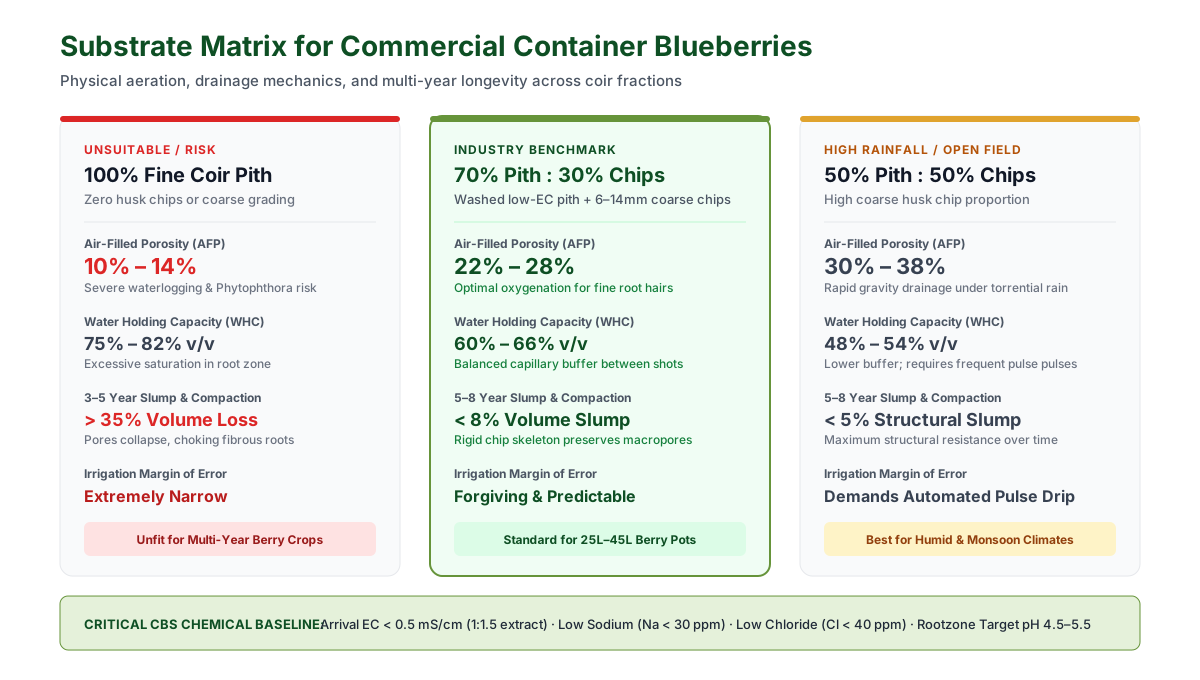
2. Technical Substrate Matrix: Physical & Hydraulic Parameters
The table below contrasts the mechanical and hydraulic performance of unblended fine coir pith against the standard commercial 70:30 and 50:50 pith-to-chip formulas utilized in professional berry operations.
| Parameter | 100% Fine Coir Pith | 70:30 Blend (Pith : Chips) | 50:50 Blend (Pith : Chips) | Optimal Blueberry Range |
|---|---|---|---|---|
| Air-Filled Porosity (AFP %) | 10% – 14% | 22% – 28% | 30% – 38% | 25% – 35% |
| Water Holding Capacity (WHC % v/v) | 75% – 82% | 60% – 66% | 48% – 54% | 55% – 65% |
| Coarse Chip Fraction (6–14 mm) | 0% | 30% ± 3% | 50% ± 4% | Dependent on climate |
| Particle Size < 1 mm (Fines) | > 45% | < 18% | < 12% | < 20% |
| 5-Year Compaction Slump | > 35% volume loss | < 8% volume loss | < 5% volume loss | < 10% |
| Dry Bulk Density (kg/m³) | 85 – 100 | 65 – 80 | 55 – 70 | 60 – 85 |
| Irrigation Strategy | High saturation risk | Balanced capillary buffering | High-frequency pulse drip | Pulse fertigation |
| Climate Recommendation | Not recommended | Moderate & Mediterranean | Subtropical / High rainfall | Farm-specific |
Values measured under standard DIN EN 13041 / CEN European growing media testing standards at -10 cm suction.
Growers in temperate regions with controlled environmental plastic tunnels typically select the 70:30 formula, which provides sufficient capillary water buffering between drip irrigation events while guaranteeing 25% minimum aeration. In open-field subtropical operations exposed to torrential seasonal rainfall (such as Southern Spain, Florida, or coastal Peru), growers favor the 50:50 blend to ensure immediate excess water evacuation and prevent waterlogging during cloudbursts.
3. The Chemical Gap: Bridging Coir pH to Ericaceous Requirements
A critical operational challenge when deploying coconut coir for blueberry production is the intrinsic pH divergence:
- Blueberry Optimal Root-Zone pH: 4.5 – 5.2 (maximum ceiling: 5.5).
- Natural Washed Coconut Coir pH: 5.8 – 6.5.
Blueberries evolved in acid bog and forest ecosystems. When root-zone pH rises above 5.8, ferric and ferrous iron precipitate out of soil solution into insoluble hydroxides, inducing severe iron chlorosis (yellowing of young terminal leaves with dark green veins). High pH also suppresses manganese, zinc, and phosphorus assimilation while elevating nitrate uptake over ammonium, which blueberries assimilate inefficiently.
Commercial growers do not attempt to chemically acidify compressed coir blocks at the factory gate with strong mineral acids, as doing so destroys structural lignin and prematurely hydrolyses hemicellulose fibres. Instead, the pH gap is bridged through precision agronomic fertigation:
- Pre-Plant Hydration with Acidified Solution: During initial block expansion, the hydration water is buffered with technical-grade nitric acid ($HNO_3$) or sulphuric acid ($H_2SO_4$) to an inlet pH of 4.5 to 4.8. This neutralizes bicarbonate alkalinity and rinses loose cations.
- Ammonium-Driven Cation Balance: In vegetative feeding schedules, blueberries prefer a high ratio of ammonium nitrogen ($NH_4^+$) to nitrate nitrogen ($NO_3^-$), typically between 30:70 and 50:50 during active flush. Plant root uptake of each $NH_4^+$ cation releases an $H^+$ proton into the rhizosphere, actively maintaining the root zone in the 4.8 to 5.2 range without media breakdown.
- Acid Injection Systems: Fertigation recipes run continuous acid injection at the drip manifold to maintain dripper solution at pH 4.8 to 5.2, tracking leachate drainage daily to ensure the substrate does not drift upward.
4. Electrical Conductivity (EC) & Salt Thresholds: The Zero-Tolerance Baseline
Because blueberry root systems lack a protective root cap and fibrous root hairs, their root epidermis is acutely vulnerable to osmotic shock. When exposed to elevated substrate salinity, the osmotic gradient reverses, drawing cellular moisture out of root tips and resulting in marginal leaf scorch, stunted shoot growth, and aborted flower buds.
While greenhouse tomatoes can thrive at substrate EC levels of 2.5 to 3.5 mS/cm, blueberries require a strict operational baseline:
- Root-Zone EC Ceiling: Maximum 1.2 to 1.5 mS/cm during peak vegetative growth; 0.8 to 1.0 mS/cm for newly established plantlets.
- Raw Coir Import Specification: Must arrive at Low EC < 0.5 mS/cm (tested via the European 1:1.5 volume extraction method or 1:2 standard dilution).
Unwashed agricultural coir typically arrives with EC levels spanning 1.8 to 4.0 mS/cm, dominated by sodium ($Na^+$) and chloride ($Cl^-$) ions accumulated from maritime coastal brackish environments. In an 8-year investment cycle where establishment capital exceeds $40,000 per hectare, introducing unwashed or improperly leached coir risks total crop failure in Year 1.
Professional export specifications must guarantee:
- Sodium ($Na^+$): Below 30 ppm (mg/L).
- Chloride ($Cl^-$): Below 40 ppm (mg/L).
- Moisture Content: Strictly under 20% to prevent anaerobic fungal proliferation during ocean transit.
5. Sourcing High-Spec Cocopeat from Sidoarjo, Indonesia
Delivering high-performance blueberry substrates requires origin-level processing rigor. At PT Ridha Dua Keluarga, we manufacture low-salinity, high-porosity coir raw materials engineered specifically to satisfy European, Australian, and American commercial soft fruit standards.
Our 5kg low EC cocopeat blocks from our Sidoarjo processing plant are produced using mature, inland East Java coconut husks, naturally lower in maritime salt contamination than coastal lagoon alternatives. We subject our raw pith to a multi-stage fresh-water washing and mechanical de-sanding circuit:
- Controlled Screening: Precision rotary trommels separate the fine dust (<1 mm), retaining long-fibre resilient pith that preserves macropore structure.
- Fresh-Water Wash Protocols: Washed exclusively with mountain-aquifer fresh water to guarantee an arrival electrical conductivity of EC < 0.5 mS/cm with certified laboratory certificates per batch.
- Coarse Husk Chip Blending: We supply individual or pre-blended 5kg blocks with customized pith-to-chip ratios (70:30, 60:40, or 50:50) graded uniformly between 6 mm and 14 mm.
- Biosecurity Compliance: Our high-pressure hydraulic compaction process (5:1 compression ratio) operates in sealed concrete facilities, ensuring media is free from weed seeds, soil contamination, and phytosanitary pests, fully compliant with international quarantine protocols.
Whether you operate commercial open-top container orchards or formulate proprietary berry mixes for horticultural distribution, CBS provides consistent batch-to-batch physical stability, verified laboratory analytics, and flexible 40ft High Cube container logistics.
To review physical grading specifications, receive certified laboratory assay sheets, or request pilot container quotations, contact our technical export team directly:
- Official Commercial Desk:
[email protected] - Head Office & Processing: PT Ridha Dua Keluarga, Sidoarjo, East Java, Indonesia
- Web Portal & Direct Inquiry Form: cocopeatblocksidoarjo.com
Related Keywords & Topics
Technical Citations & Referenced Standards
Standard testing methods, government regulations, and industry benchmarks cited in this document.
- [1]International Blueberry Organization (IBO) — Global State of the Blueberry Industry Report
- [2]University of Florida IFAS Extension — Blueberry Substrate Production in Greenhouses and High Tunnels
- [3]Oregon State University Extension — Substrate Culture for Commercial Blueberry Production
- [4]RHP (Netherlands) — Quality Standards for Soft Fruit Substrates and Coir Physical Longevity
CBS Agronomy Notes
Sourcing 5kg Cocopeat Blocks for Commercial Agriculture?
Receive customized EC/pH lab certificates, container stuffing simulation (palletized or floor loaded), and FOB Tanjung Perak pricing.
Related Technical Notes
View all →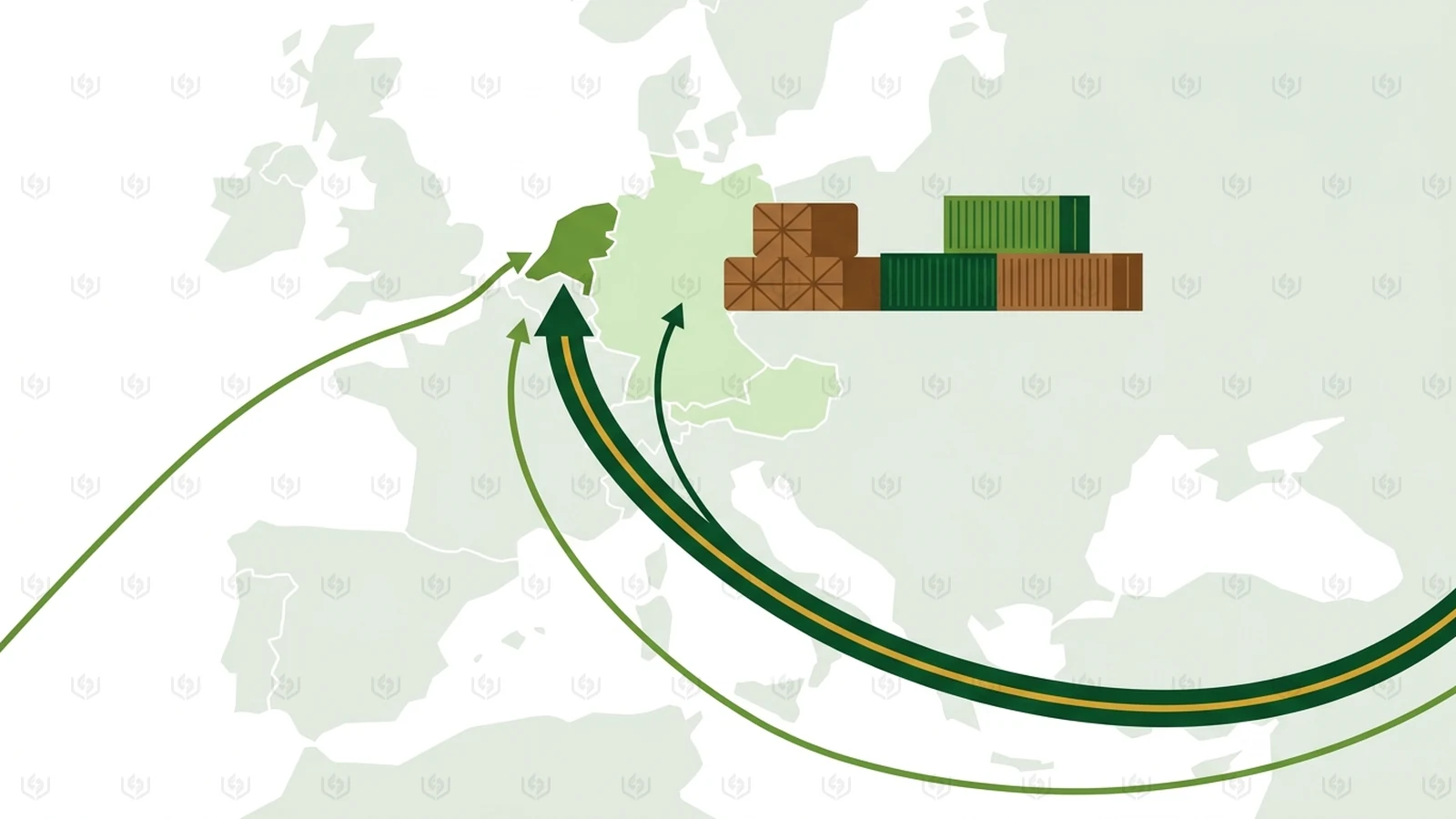
19 October 2026
Europe's Coir Supply Map: What 2024 Trade Data Shows About Supplier Concentration in the Netherlands and Germany
UN Comtrade 2024 data on Dutch and German HS 530500 imports: India supplies over half the volume, Indonesia barely registers. What that means for coir buyers.

12 October 2026
Cation Exchange Capacity (CEC) in Coir Substrates: Calcium Buffering vs Plain Water Washing
Why raw cocopeat releases potassium and sodium during cultivation, and how calcium nitrate buffering compares with plain water washing on CEC, EC, and crop safety.